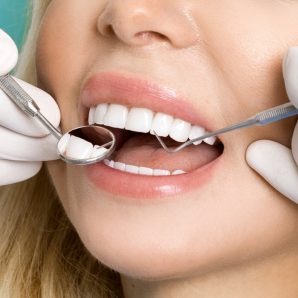
What counts as an attractive smile isn’t universal. It shifts depending on where you live, who you’re surrounded by and even what feels natural within your own community. At Dental Haus, we see this play out constantly across our Gold Coast and Palm Beach patients, where preferences around dental veneers and broader smile design have moved well beyond a single “ideal” look. Understanding these local and cultural influences is a big part of how we approach smile design today, rather than defaulting to one standard treatment plan for every patient.
Why Smile Aesthetics Are No Longer One-Size-Fits-All
Cosmetic dentistry used to lean heavily toward a fairly uniform idea of a “perfect” smile — very bright, very even, very symmetrical. That’s shifted significantly. Patients now come in with a much wider range of preferences, shaped by their profession, their age, their cultural background, and increasingly, what they’re seeing reflected back at them on social media.
A young professional preparing for client-facing work might prioritise a brighter, more uniform look that reads as polished and confident. Someone else might specifically want to retain a bit of natural tooth variation, because a completely uniform smile feels less like them and more like a generic template. Neither preference is more correct than the other, they’re just different starting points, and modern smile design needs to accommodate both rather than pushing everyone toward the same result.
What Shapes Smile Preferences On The Gold Coast?
Local context plays a bigger role in smile aesthetics than most people realise. On the Gold Coast and in areas like Palm Beach, we tend to see a few consistent influences shaping what patients are asking for.
- Lifestyle and climate. A beach-adjacent, outdoor lifestyle tends to favour a natural, healthy-looking smile over an overly stark, uniform white. The aesthetic that suits a relaxed coastal lifestyle looks different to what might suit a more corporate, city-based clientele.
- Professional environment. Patients working in client-facing or image-conscious industries often lean toward a more polished, camera-ready result, while those in less public-facing roles may prioritise comfort and subtlety over maximum brightness.
- Age demographics. Younger patients are frequently influenced by what they see on social media and are often more open to visible cosmetic work, while older patients tend to prioritise a natural-looking result that complements their existing features rather than dramatically changing them.
- Social media influence. Platforms have made smile design far more visible than it used to be, and patients often arrive with a reasonably clear reference point for what they’re hoping to achieve, rather than starting the conversation from scratch.
None of these factors work in isolation — most patients are a blend of several, which is exactly why a cookie-cutter approach to dental veneers on the Gold Coast doesn’t serve people particularly well anymore.
Digital Smile Design And Ai-Assisted Planning: A New Level Of Precision
One of the biggest shifts behind this move toward personalisation is technology. Digital smile design lets us map out a proposed result against a patient’s actual facial structure and existing teeth, rather than relying purely on a generic template of what veneers or whitening “usually” look like.
AI-assisted planning tools are increasingly being used to help refine these previews further, taking into account facial proportions, symmetry and the natural characteristics of a patient’s existing smile. This doesn’t replace clinical judgement, but it does mean patients can see a much more accurate representation of a proposed outcome before any treatment begins, which makes the whole planning process more collaborative than it used to be.
For patients researching veneers or broader smile makeovers, this shift matters because it means the end result can be tailored far more precisely to individual facial features and personal preference, rather than applied as a standard look across every patient.
The Shift Toward Minimally Invasive Smile Enhancements
Alongside the move toward personalisation, there’s been a broader shift toward minimally invasive treatment options. Teeth whitening, dental bonding and conservative veneer techniques are increasingly preferred over more extensive treatment, particularly among patients who want a noticeable improvement without significant changes to their natural tooth structure.
This shift reflects a couple of things happening at once. Patients are generally more informed than they used to be, and many specifically ask about the least invasive option that will still achieve their goals. At the same time, advances in materials and technique mean a conservative approach can now achieve results that once required more extensive treatment, which gives patients genuinely more choice than they had previously.
For someone exploring dental veneers in Palm Beach, this often means a conversation about how much of the natural tooth needs to be involved in achieving the look they want, rather than assuming a full veneer treatment is the only path to a smile makeover.
Facial Harmony Over Isolated Dental Perfection
Perhaps the most significant shift in smile design philosophy is the move away from treating teeth as an isolated feature and toward considering how a smile sits within the whole face. A technically “perfect” set of veneers can still look out of place if it doesn’t account for lip line, facial symmetry, skin tone or the patient’s overall features.
This broader view of facial harmony means smile design increasingly starts with the face as a whole, rather than starting and ending with the teeth themselves. It’s part of why the same treatment — the same shade, the same shape of veneer — can look completely different, and equally successful, on two different patients with different facial structures.
Why Patient Involvement Matters In Modern Smile Design
Patient involvement has become a core part of getting a good result, rather than an optional extra. Digital previews let patients see a proposed outcome and give feedback before treatment begins, which reduces the gap between what a patient imagined and what they actually end up with.
This collaborative approach also means preferences that might not come up in a general consultation — wanting to retain some natural tooth variation, preferring a slightly less uniform result, prioritising comfort over maximum brightness — get factored in properly, rather than assumed away in favour of a standard treatment plan.
For patients researching cosmetic dentistry, this is worth keeping in mind when choosing a clinic: a practice that builds digital previews and consultation into the process is generally better positioned to deliver a result that matches individual expectations, rather than a generic idea of what a “good” smile should look like.
Choosing The Right Approach For Your Smile
Local trends, lifestyle, age and personal identity all play into what makes a smile feel right for the person wearing it, which is exactly why smile design has moved so far from a one-size-fits-all approach. Whether that means a brighter, more uniform look, a subtler enhancement that keeps some natural character, or something in between, the starting point should be your own face and preferences rather than a generic template.
At Dental Haus, we work through this with every patient considering dental veneers on the Gold Coast or Palm Beach, using digital previews and a proper consultation to make sure the plan actually reflects what you’re hoping to achieve. If you’re exploring veneers, teeth whitening, or a broader smile makeover, get in touch with our team to talk through what would genuinely suit your smile and your face.
Frequently Asked Questions
Do smile preferences really differ by location?
Yes, lifestyle, climate, professional environment and cultural context all influence what patients in different areas tend to prefer, which is why smile design increasingly accounts for local and individual factors rather than a single standard look.
What is digital smile design?
Digital smile design uses digital previews and planning tools to map a proposed treatment outcome against a patient’s actual facial structure, giving a more accurate picture of the result before treatment begins.
Are veneers the only option for a smile makeover?
No. Many patients achieve significant improvement through minimally invasive options like teeth whitening and bonding, and a consultation can help determine which approach suits your goals and existing teeth.
Why does facial harmony matter in smile design?
A smile that’s designed with the whole face in mind — lip line, symmetry, and overall features — tends to look more natural and cohesive than one treated as an isolated feature.
How involved can I be in planning my own smile design?
Very involved. Digital previews and consultations are designed specifically to let patients give feedback on a proposed outcome before